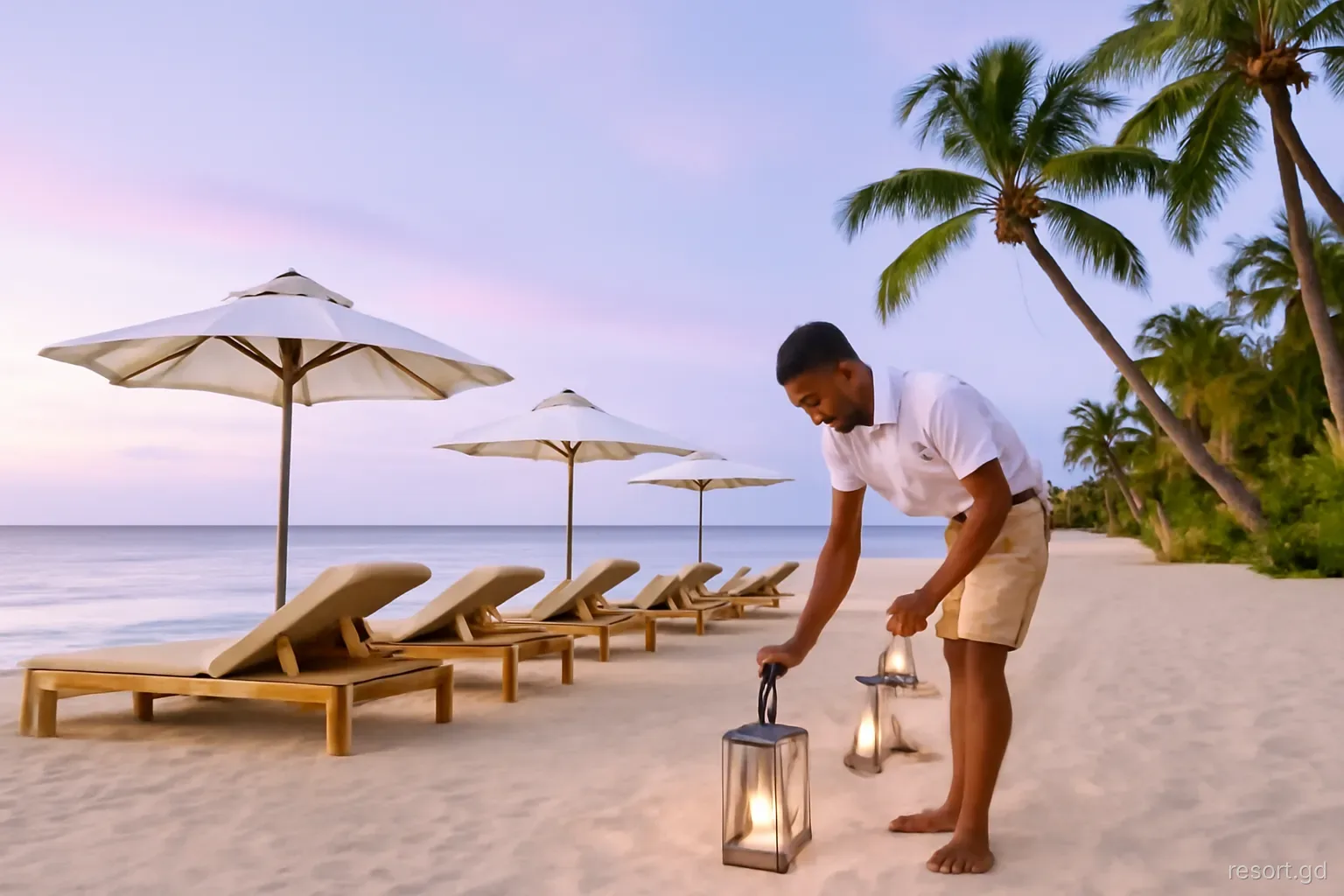
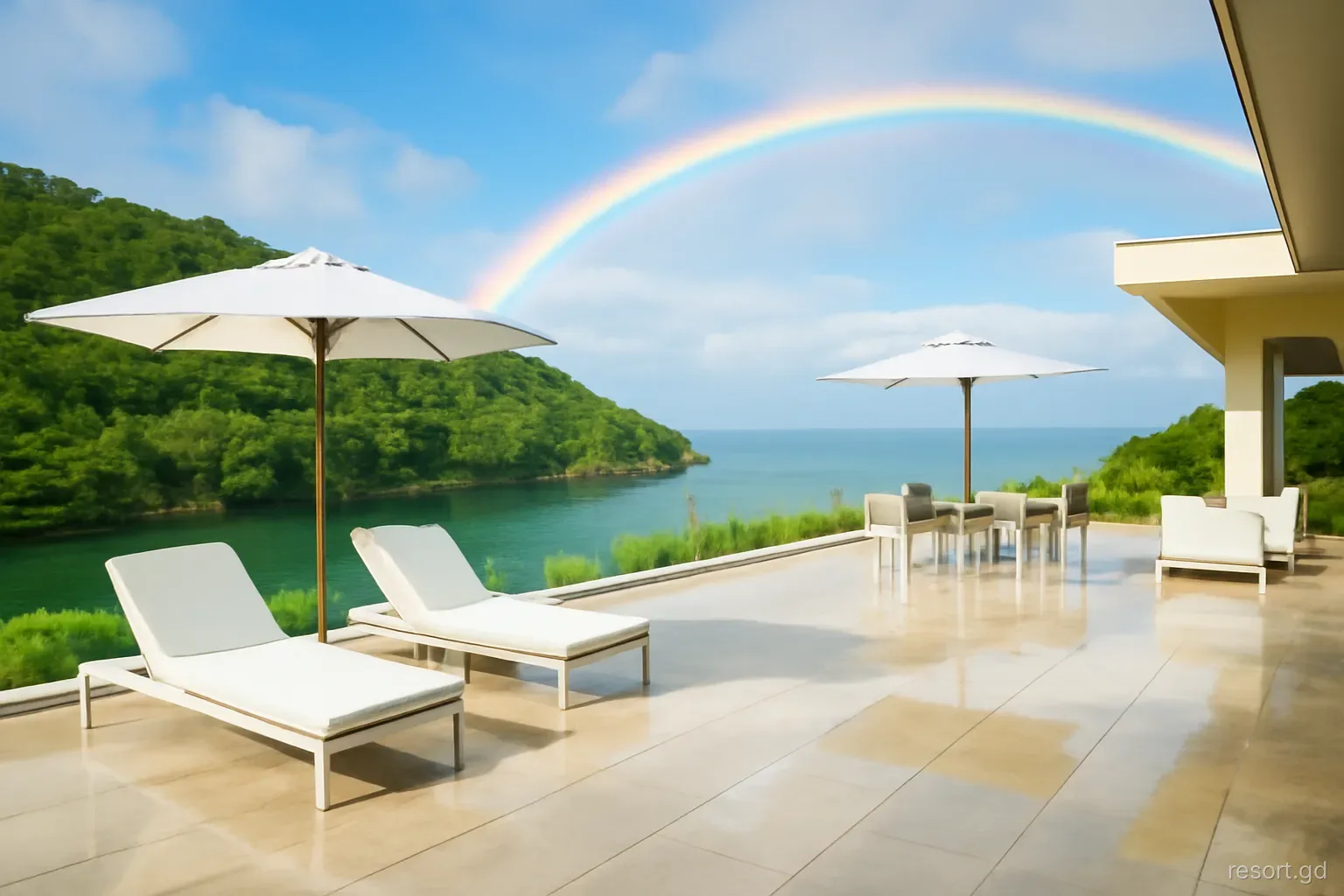
From June to November, Grenada's luxury resorts shift into what the industry calls the green season. Rates drop, crowds thin and the island turns a deeper shade of green after regular rain. For flexible travellers, it can be the best-value time to stay at a property that would be out of reach in February.
The trade-offs are real and worth understanding: more rain and humidity, the Atlantic hurricane season, and the fact that some resorts close for maintenance in the quietest weeks. Grenada sits near the southern edge of the usual hurricane track, which historically has meant fewer direct hits than islands further north, but it is not immune. This guide sets out what the green season is actually like at a luxury resort, which months suit which travellers and how to protect a booking.
What the weather is really like
The green season is warmer, more humid and wetter than the dry months, but it is not a season of constant rain. A typical pattern is a bright morning, a build-up of cloud and a heavy shower or two in the afternoon or overnight, followed by sunshine again. Some days are completely dry; others bring prolonged rain, particularly when a tropical wave passes through. The interior and the north of the island receive more rain than the south-west coast, where most luxury resorts sit.
Sea temperatures are at their warmest, which suits swimmers and divers, and visibility under water is often excellent between showers. The trade winds are gentler than in winter, which can make humid afternoons feel heavier, so air conditioning and shaded terraces matter more than usual. September and October are usually the wettest and most humid months; June and July often feel closer to the dry season, with plenty of sun.
Hurricane season in perspective
The Atlantic hurricane season officially runs from 1 June to 30 November, with the peak from about mid-August to mid-October. Grenada's position near 12 degrees north puts it at the southern margin of the usual storm track, and long periods pass without a direct hit. Hurricane Ivan in 2004 caused severe damage across the island, Hurricane Emily brought further damage in 2005, and Hurricane Beryl devastated much of Carriacou and Petite Martinique in July 2024, an unusually early and intense storm.
For a visitor, the realistic risk on any given week is low, but it is not zero, and tropical storms can disrupt flights even when they do not hit the island directly. The sensible response is preparation rather than avoidance: book flexible rates or good insurance, watch the forecasts from the National Hurricane Center and Grenada's national disaster agency (NaDMA) in the week before travel, and follow the resort's guidance if a storm develops. Luxury resorts in the region have established procedures for storms, including secure areas and stocks of water and fuel.
Month by month across the green season
June. Often sunny with occasional showers, low rates and quiet beaches. A good choice for couples wanting value without the peak of storm season.
July. Similar weather to June, though Hurricane Beryl showed that early-season storms can occur. Northern school holidays bring more families to resorts that welcome children.
August. Spicemas, Grenada's carnival, takes over the second week of the month, with parades and fetes culminating on the Monday and Tuesday. Hotels near St George's and Grand Anse fill up and rates rise for those dates.
September. Usually the quietest month, with the lowest rates and the highest chance of rain and storms. Some resorts close for refurbishment.
October. Still wet and humid, but the cruise season begins again and some closed properties reopen, often with refreshed rooms.
November. Rainfall begins to ease, rates are still below winter levels, and resorts prepare for the season ahead. A popular month for shoulder-season deals, and a good time to see the island freshly green before the winter crowds arrive.
What changes at the resorts themselves
Expect a slightly different experience at many luxury properties in the quietest months. Typical changes include:
- Lower rates and offers: free nights, upgrades, spa credits or dining packages are more common than in winter.
- Closures for maintenance: some resorts close entirely for several weeks, usually around September and October; others close one restaurant or pool at a time.
- Reduced activities: some excursions, entertainment nights or water sports may run less frequently with fewer guests.
- Quieter atmosphere: pools and restaurants can feel almost private, which many couples value highly.
- Refurbishment noise: if work is under way while the resort stays open, ask which areas are affected before booking.
- Upgrades at check-in: with spare rooms available, polite requests for a better room are more often successful, though never guaranteed.
Rainy-day options near the resorts
A wet afternoon in the green season is rarely a lost day. Most luxury resorts have a spa, and booking a treatment for the hours when showers are most likely is a simple way to turn the weather to advantage. Some properties run cooking demonstrations, rum tastings or cocoa and chocolate sessions in the rainy months, using island ingredients such as nutmeg, cinnamon, cocoa and local fruit.
Beyond the resort, St George's is a short drive from Grand Anse and the south coast. Fort George, with its views over the Carenage, the covered parts of the market area and small chocolate and spice shops in town make a good few hours even in changeable weather. The Grenada National Museum, housed in an old colonial-era building in the centre of town, covers the island's Amerindian, colonial and revolutionary history; opening hours vary, so check before going. Rain in the interior also swells the waterfalls, so a trip to Annandale or Concord on a showery day can be rewarding, though paths will be slippery and river crossings should be avoided after heavy rain.
How to protect a green-season booking
A few precautions reduce the risk of losing money or holiday time to bad weather:
- Choose a flexible or refundable rate where possible, even if it costs a little more.
- Buy travel insurance soon after booking and check that it covers named storms and hurricane-related disruption, as cover can be excluded once a storm has been named.
- Read the resort's hurricane policy; some brands offer guarantees that allow rebooking or compensation if a storm disrupts the stay.
- Book flights and accommodation together, or with an agent, so that changes can be coordinated if a storm affects travel.
- Check that the resort will be fully open for your dates and ask about any planned closures or works.
- Monitor forecasts in the week before departure and stay in contact with the resort if a system develops.
Who the green season suits, and who should avoid it
The green season suits couples and solo travellers with flexible dates, divers who value warm water and good visibility, and anyone for whom a quiet resort and lower rates matter more than guaranteed sunshine. It also suits visitors who want to experience Spicemas in August, provided they book early. Many repeat visitors to Grenada choose June, July or November deliberately, combining good value with mostly fine weather.
It suits less well those whose trip cannot move: a wedding with guests flying in, a once-in-a-lifetime honeymoon on fixed dates, or travellers with limited holiday who would be badly affected by a few days of rain. For them, the dry months from mid-December to April, or the shoulder weeks just after, offer more certainty. Families tied to school holidays may find July and August the only option and can still have an excellent stay with sensible precautions and flexible bookings. Whatever the month, keeping the first and last days of the trip free of fixed plans gives room to move an excursion or a boat trip if the weather turns.
Frequently asked questions
Is it worth visiting Grenada in hurricane season?
For flexible travellers, yes. Rates are lower, resorts are quieter and Grenada lies near the southern edge of the usual hurricane track. The risk of a direct hit in any given week is low but real, so book flexible rates and insurance that covers named storms.
What is the wettest month in Grenada?
September and October are usually the wettest and most humid months, with frequent afternoon showers and the highest chance of tropical storms. June and July tend to be drier and sunnier, while November begins the transition back to the dry season.
Do Grenada resorts close in the low season?
Some do. A number of resorts close for several weeks, typically around September and October, for maintenance or refurbishment. Others stay open but close individual restaurants or pools. Check opening dates directly with the property before booking.
Has a hurricane hit Grenada recently?
Hurricane Beryl struck Carriacou and Petite Martinique in July 2024, causing severe damage there. The mainland was hit hard by Hurricane Ivan in 2004 and again by Hurricane Emily in 2005. Long periods often pass between direct hits.
Are green-season deals at luxury resorts real?
Yes, rates at Grenada's luxury resorts are generally at their lowest between June and November, outside Carnival week. Offers such as free nights, upgrades and resort credits are more common. Compare the total cost, including taxes and service, against high-season prices.
What should you pack for the green season in Grenada?
Light, breathable clothing, a compact umbrella or rain jacket, insect repellent for evenings, reef-safe sunscreen and sandals that cope with wet ground. If planning hikes, bring shoes with good grip, as trails in the interior can be muddy after rain.