A rental villa is a real house, not a hotel, and Grenadian houses work slightly differently from homes in North America or Europe. Water may come from a cistern under the floor, electricity is among the more expensive in the region, the pool is unsupervised, the garden is full of wildlife, and security depends on the habits of the people staying there. None of this is complicated, but knowing how the house works makes the stay calmer and avoids awkward conversations with the owner at the end.
This guide covers the practical side of living in a Grenada villa for a week or more: water, power, pools, insects and animals, rubbish and security. Every house is different, so use it alongside the villa manager's own instructions.
Water: mains, cisterns and conservation
Many Grenadian homes, including villas, store water in a cistern or tank, filled from the mains supply run by NAWASA, the National Water and Sewerage Authority, or from rainwater collected off the roof. A pump pushes water from the cistern to the taps, which is why a power cut can sometimes mean no water pressure until the power returns or a generator starts.
During long dry spells, typically towards the end of the dry season around March to May, mains supply can be interrupted in some areas and cisterns may run low. Villa managers may ask guests to conserve water: shorter showers, full loads in the washing machine, no hosing down of terraces. Taking this seriously avoids running dry, which can mean a water delivery by truck at extra cost.
Ask the manager whether the tap water is suitable for drinking. Treated mains water is generally safe, but where water is stored in cisterns some owners recommend a filter or bottled water for drinking.
Power: air conditioning, costs and outages
Electricity in Grenada, supplied by GRENLEC, is reliable most of the time but expensive by international standards, largely because it is generated mainly from imported fuel, with a growing share from solar. Air conditioning is the biggest single cost in a villa, which is why some rentals cap electricity use or charge for consumption above a set amount, particularly on longer stays.
Simple habits help: close doors and windows when the air conditioning is on, switch it off when leaving the room, use ceiling fans in living areas, and set a sensible temperature rather than the lowest possible. In many villas, bedrooms are air-conditioned while living areas rely on breeze, which works well when the trade winds are blowing.
Some villas now have solar panels, with or without battery storage, which can reduce electricity costs and keep essentials running during an outage. If the house has a solar system, ask the manager how it works and whether heavy loads such as air conditioning and pool pumps should be run at particular times of day.
Short power cuts happen occasionally, especially in storms. Know where the torches are, whether there is a generator and what it powers, and keep phones charged. Voltage is 230 volts with British-style three-pin sockets, so bring adapters and check that devices accept the voltage.
Pool safety
No lifeguard. Villa pools are unsupervised. Agree within the group who is watching children whenever they are near the water, and never leave young children alone by the pool, even briefly.
Fencing. Many villa pools are not fenced. Families with toddlers should ask in advance about fences, gates or covers, and consider bringing door alarms or asking the manager about temporary barriers.
Depth and edges. Check the depth before anyone dives. Many villa pools are shallow at one end and have hard edges, steps or infinity edges with a drop.
Alcohol and night swimming. Most pool accidents involving adults happen after drinks or at night. Keep pool lights on and swim with others.
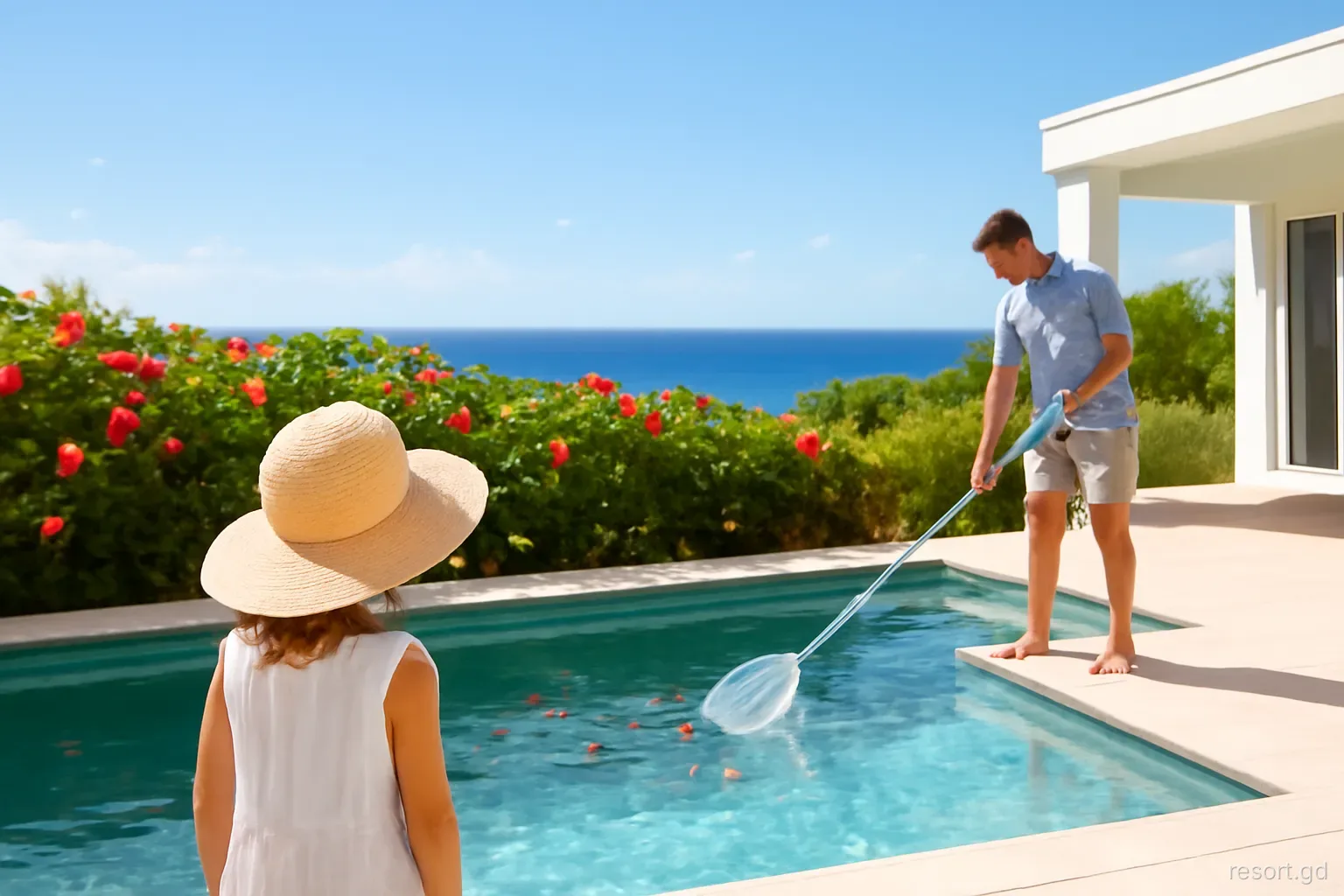
Chemicals and maintenance. Leave pool chemicals to the pool attendant, and report cloudy water or broken equipment.
Wildlife and insects in and around the house
Villas are surrounded by gardens and often open to the breeze, so wildlife is part of the experience:
- Mosquitoes are most active at dawn and dusk. Close screens, use repellent, sleep under fans or nets, and remove standing water such as buckets and plant saucers.
- Ants find food quickly. Keep food sealed, wipe surfaces and store fruit in the fridge.
- Geckos and lizards eat insects and are harmless; leave them be.
- Tree frogs sing loudly at night, especially after rain. Earplugs help light sleepers.
- Stray dogs may wander in residential areas. Do not feed them, and keep gates closed.
- Mona monkeys appear in some hillside and rural areas. They are wild, so do not feed them, and keep food indoors.
Security habits that work
Grenada is generally considered a safe destination, and most villa stays pass without incident. Opportunistic theft is the main risk, usually of items left in plain view or in houses and cars left open. Good habits make a big difference.
Lock doors and close accessible windows and grilles when going out and at night, use the alarm if there is one, and keep passports, cash and valuables in the safe. Do not leave phones, cameras or bags on terraces or by the pool overnight, or visible in parked cars. Keep gates closed and outside lights on at night if the manager recommends it.
Be discreet with information about your plans and the villa's location on social media while you are there. If anything happens, contact the villa manager, and in an emergency call 911 for police, fire or ambulance. The manager can help with reports, which insurers usually require.
Rubbish, laundry and leaving the house
Rubbish collection varies by area. Ask the manager about collection days, where bins are kept and how to store rubbish so it does not attract dogs, ants or rodents. Recycling facilities are limited, so many villas simply ask guests to bag rubbish securely. Avoid leaving food waste outside overnight.
Laundry arrangements also vary. Some villas have a washing machine and dryer for guest use, while others include laundry as part of housekeeping. In the humid months, clothes dry slowly indoors, so use outdoor lines in the morning sun and bring them in before afternoon showers.
On departure, follow the manager's check-out instructions. Typically this means leaving the house reasonably tidy, running the dishwasher, putting rubbish out, turning off air conditioning, locking up and leaving keys as agreed. Report any breakages honestly; it is far better than having the deposit queried later.
Neighbours, noise and good manners
Most villas sit in residential areas, and the neighbours are Grenadian families, long-term residents or other holidaymakers. Music by the pool late at night carries surprisingly far across hillsides and bays, and complaints usually reach the villa manager quickly. Keep evening noise reasonable, especially on weeknights, and let the manager know in advance about any celebration.
Greet neighbours, staff and passers-by with a good morning or good afternoon; it is a basic courtesy in Grenada and makes a real difference to how a group is received. Park considerately on narrow lanes, where blocking a driveway or a bend can cause real problems for residents.
Respect also applies to the house itself. Avoid moving heavy furniture, using pool toys that can damage tiles, or leaving wet towels on wooden furniture. Treating the villa as you would a friend's home keeps deposits intact and keeps owners willing to rent to visitors.
Frequently asked questions
Is tap water safe in Grenada villas?
Treated mains water from NAWASA is generally safe to drink, but villas storing water in cisterns may recommend filtered or bottled drinking water. Ask the villa manager what they advise for drinking and brushing teeth, and follow any water conservation requests during dry spells.
Why do some Grenada villas charge for electricity?
Electricity is expensive in Grenada, and air conditioning uses a lot of it. Some villas include a set amount and charge for extra use, especially on longer stays. Simple habits such as closing windows when the air conditioning is on keep costs down.
Are villa pools in Grenada safe for children?
They can be, with supervision. Many villa pools are unfenced and have no lifeguard, so adults must watch children constantly near the water. Ask about fencing or covers before booking, check depths, and avoid night swimming without lights and company.
Is it safe to stay in a villa in Grenada?
Generally yes. Grenada is considered a safe destination, and the main risk is opportunistic theft. Lock doors and windows, use the alarm and safe, and avoid leaving valuables in view. In an emergency, call 911 and contact the villa manager.
What should be done if the water stops at a Grenada villa?
Check whether the power is on, since pumps need electricity, then contact the villa manager. The cistern may be low or the mains supply interrupted. Managers can arrange repairs or a water delivery. Conserving water during dry spells helps prevent this.