
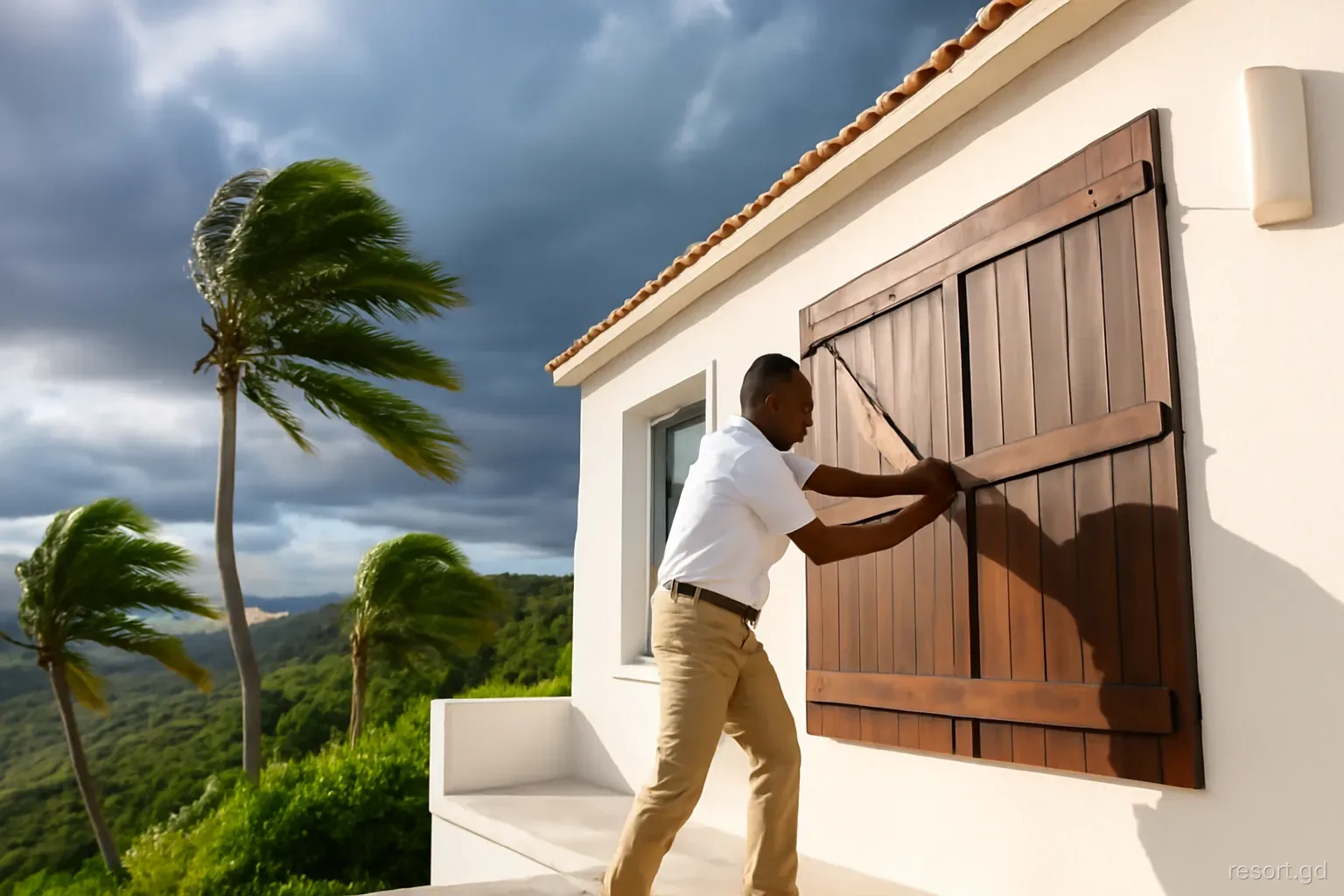
The Atlantic hurricane season runs from 1 June to 30 November, and Grenada sits near its southern edge. For decades many people regarded the island as largely outside the hurricane belt, until Hurricane Ivan in September 2004 devastated the mainland and Emily followed in 2005. In July 2024, Hurricane Beryl caused severe damage on Carriacou and Petite Martinique. Storms are less frequent here than further north, but they happen.
That does not mean avoiding Grenada for half the year. Many travellers rent villas in the summer and autumn months, when prices are lower and the island is green and quiet. It does mean paying close attention to the rental contract, insurance and the house's storm arrangements before booking, and knowing what to do if a storm forms during your stay.
Understanding the risk
The statistical peak of the Atlantic season is from mid-August to mid-October. In Grenada, most of the summer brings ordinary tropical weather: heat, humidity, heavy showers and calm seas. Tropical waves pass regularly, bringing rain and gusty wind, and only a small fraction develop into storms that affect the island directly.
Forecasting has improved greatly. Storms are typically tracked for days before they reach the southern Caribbean, giving time to prepare or leave. The National Disaster Management Agency, known as NaDMA, coordinates preparedness and issues guidance in Grenada, while the Grenada Meteorological Service issues local watches and warnings. Visitors should follow these official sources and the instructions of their villa manager.
The practical risks for a villa renter are less about personal danger, which careful preparation keeps low, than about disruption: cancelled flights, closed airports, power and water outages and the cost of a holiday cut short. Contracts and insurance are where those risks are managed.
What to check in the rental contract
Hurricane clause. Does the contract say what happens if a hurricane watch or warning is issued for Grenada before or during your stay? Some owners offer a refund, credit or date change; others offer nothing.
Trigger events. Is the clause triggered by an official warning, the airport closing, flights being cancelled, or damage to the property? Vague wording leads to disputes.
Partial stays. If you must leave early because of a storm, is there a pro-rata refund or credit for unused nights?
Damage to the villa. What happens if the villa is damaged before arrival and cannot be occupied? Is alternative accommodation offered?
Deposits and payments. How much is paid upfront, when, and is it refundable under the hurricane clause? Paying the balance close to arrival reduces exposure.
Travel insurance that actually covers storms
Ask, too, whether the owner holds property insurance and how quickly the villa was repaired after past storms. An owner who can describe what happened during previous events, and what has been strengthened since, is usually one who takes guests' safety seriously.
Comprehensive travel insurance is essential for summer and autumn travel. Look for policies that cover cancellation and curtailment caused by natural disasters, including hurricanes, and check how they define the trigger: an official warning, a named storm, or the destination being declared uninhabitable.
Timing matters. Many insurers will not cover a storm that has already been named or forecast when the policy is bought, so buy insurance as soon as you book the villa and pay the deposit. Check that the policy covers deposits and payments made directly to private owners, not only bookings through agents or platforms.
Also check cover for extra accommodation and travel costs if you are stranded, medical evacuation, and loss of baggage. Keep copies of the rental agreement, receipts and correspondence, since insurers will ask for them.
Storm features to ask about before booking
Villas vary widely in how well they are prepared for storms. These questions give a quick picture of a property's resilience:
- Does the house have hurricane shutters, impact-resistant glass or another way to protect windows and doors?
- Is there a backup generator, how is it fuelled and what does it power?
- Does the house have a water tank or cistern that can supply water if the mains is cut?
- Has the roof been built or reinforced to modern standards, with hurricane straps and secure fixings?
- Is there a designated safe room or interior space for sheltering?
- Who will secure the property and help guests if a storm approaches, and how quickly can they arrive?
- Is there a written storm plan, and will it be shared on arrival?
If a storm forms during your stay
If a tropical storm or hurricane threatens Grenada while you are in a villa, act early and calmly:
- Follow official updates from the Grenada Meteorological Service and NaDMA, along with local radio, and stay in contact with your villa manager.
- Contact your airline early. If you decide to leave before the storm, flights fill quickly once a watch is issued.
- If staying, follow the manager's instructions on shutters, outdoor furniture and the pool area.
- Stock water, non-perishable food, batteries, torches, medication and cash, since cash machines and card payments may stop working.
- Charge phones and power banks, and agree a meeting point and plan within your group.
- Shelter in the safest interior room during the storm, away from windows, and do not go outside during the calm of the eye.
- After the storm, wait for official clearance before travelling, and beware of fallen power lines, debris and flooded roads.
Choosing when and where to book
If you want low prices with lower risk, consider the early part of the season, June and July, or late November. The statistical peak in September and early October carries the highest risk of disruption, and many small businesses close then anyway.
Within Grenada, properties at higher elevations are less exposed to storm surge but more exposed to wind; low-lying waterfront villas carry surge and flooding risks. Well-built houses with good roofs, shutters and generators matter more than location alone.
Many villa owners have rebuilt or reinforced their properties since Ivan in 2004, and some now market their storm resilience openly. Asking about it is entirely normal and a good owner will answer in detail.
Flights deserve the same thought as the house. Direct and connecting services to Grenada run through a small number of hubs, and when a storm threatens the region, seats out fill fast. Booking flexible fares, avoiding the tightest connections and keeping a little spare budget for a change of plan reduces stress if the forecast turns.
Why summer villa stays still appeal
Set against the risks, the case for a summer or autumn villa stay is strong. Rates are usually well below the winter peak, and some owners offer weekly reductions, free extra nights or included staff hours to fill quieter weeks. Popular houses that are impossible to book at Christmas often have availability from June to early December.
The island is at its greenest after the rains begin, waterfalls run fuller, fruit such as mangoes is abundant in early summer, and the sea on the west coast is often flat and clear. Divers and snorkellers frequently rate these months highly. Local events also fill the calendar, from Fisherman's Birthday in Gouyave at the end of June to Spicemas in August.
The key is to go in with eyes open: book a resilient house, read the contract, insure early and stay flexible. Plenty of visitors return to Grenada every summer for exactly these reasons, and most never experience anything more dramatic than a heavy afternoon shower.
Frequently asked questions
When is hurricane season in Grenada?
The Atlantic hurricane season runs from 1 June to 30 November, with the highest risk from mid-August to mid-October. Grenada lies near the southern edge of the main belt, so direct hits are less frequent than further north, but major storms such as Ivan in 2004 and Beryl in 2024 show they do occur.
Does travel insurance cover hurricanes in Grenada?
Many comprehensive policies do, but the terms vary. Look for cover for cancellation and curtailment due to natural disasters, check how the trigger is defined, and buy the policy when you book, since storms already named or forecast are usually excluded.
Will a villa owner refund a booking if a hurricane hits?
It depends on the contract. Some owners refund or rebook if an official warning is issued or the airport closes; others offer no refund. Check the hurricane clause before paying a deposit, and rely on travel insurance for cover where the contract is limited.
Do Grenada villas have hurricane shutters?
Many villas built or rebuilt since Hurricane Ivan have shutters, impact glass or reinforced construction, but standards vary. Ask the owner what storm protection the house has, whether there is a generator and water tank, and who will secure the property if a storm approaches.
Who issues storm warnings in Grenada?
The Grenada Meteorological Service issues local watches and warnings, and the National Disaster Management Agency, NaDMA, coordinates preparedness and response. Visitors should follow these official sources, local radio and their villa manager's instructions rather than rumours on social media.