
Most guides tell you how to choose a small hotel in Grenada. Fewer explain what daily life inside one is like, and that is where first-time visitors are caught out. The night chorus of tree frogs, the water supply that depends on rain, the evening flight that leaves you without a room for half a day, the breakfast that starts later than you hoped, the wonderful staff who move at a gentler pace than a big-city hotel: none of this is a fault, but all of it is easier when you expect it.
These are the realities that regular visitors take for granted and newcomers often discover on their first night. Knowing them in advance means you can plan around them, pack for them and spend your energy enjoying the place instead of being surprised by it.
The night is not silent
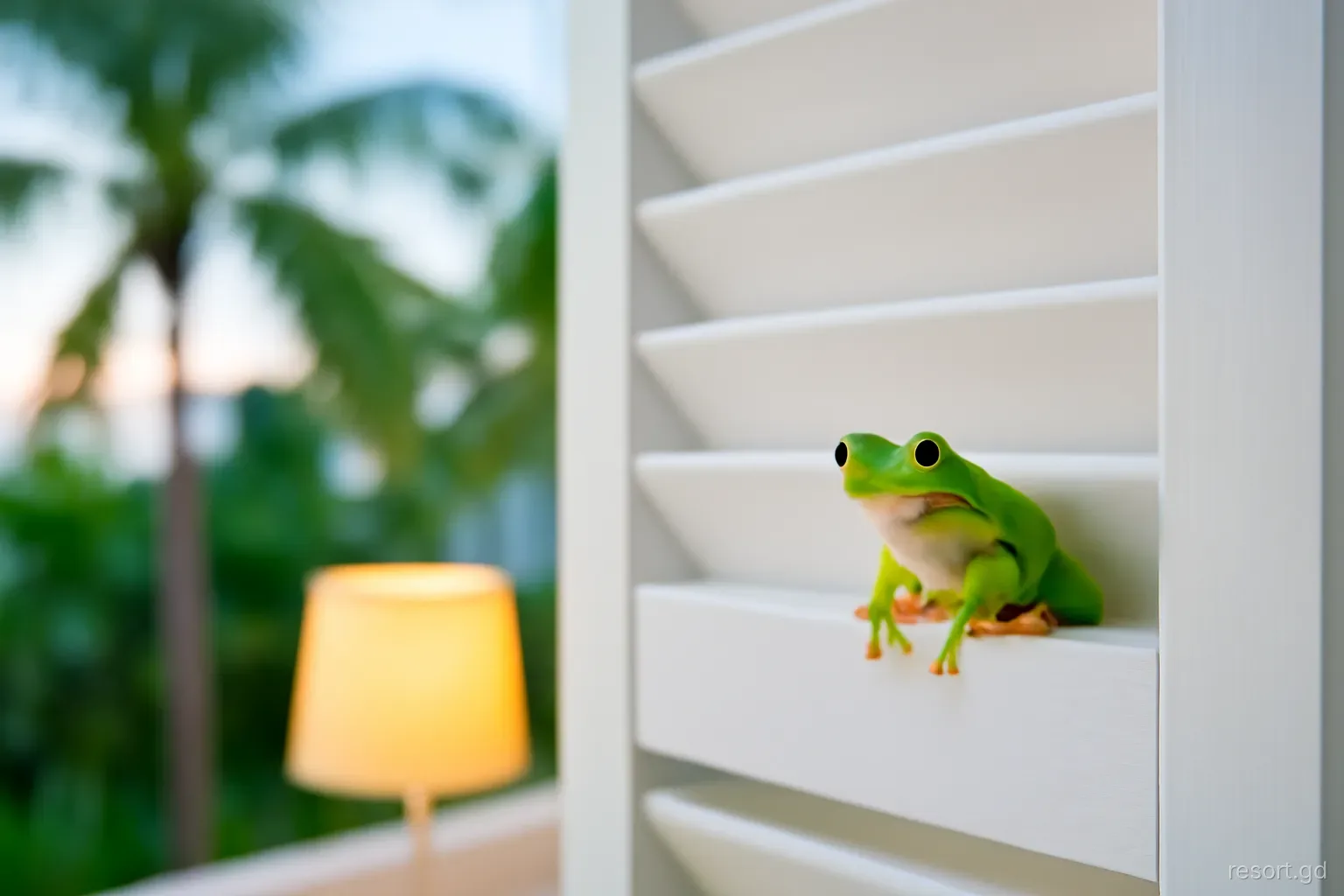
Tree frogs. The tiny whistling frogs that sing from dusk to dawn are one of the defining sounds of the Caribbean night. Most visitors come to love them; a few light sleepers do not. Earplugs solve it.
Dogs and roosters. Wherever there are houses nearby, which is almost everywhere in Grenada, dogs bark at night and roosters crow well before dawn. Hillside hotels hear sound from the valley below.
Weekend music. Friday and Saturday nights often bring music from bars, community events or private parties, carried across the water or up the hill. In the weeks before Spicemas, soca plays loudly and late.
Rain on the roof. A sudden downpour on a galvanised roof is very loud. It rarely lasts long.
Water, power and hot showers
Many small hotels in Grenada store water in cisterns or tanks, topped up from the mains supply run by NAWASA, the national water authority, or from rainwater collected off the roof. In a long dry spell, typically towards the end of the dry season around April and May, properties may ask guests to conserve water. Water pressure in hillside buildings can be modest, and hot water may come from solar heaters that work best in the afternoon. A quick question at check-in about the best time for a hot shower is common sense.
Electricity, supplied by GRENLEC, is reliable most of the time but among the more expensive in the region, which is why some small hotels ask guests to switch off air conditioning when they leave the room. Short power cuts happen occasionally, especially in storms. Larger properties usually have generators; smaller ones may not, or may run them only for essentials. Keep a small torch or phone light handy, and charge devices when you can.
Tap water in many hotels is treated mains water, but some properties recommend filtered or bottled water for drinking. Ask rather than assume.
Check-out, late flights and luggage
Many flights from Grenada to North America and Europe depart in the afternoon or early evening, while standard check-out at small hotels is usually late morning. That leaves a gap of several hours, and small properties rarely have spare rooms to offer late check-out in the high season.
Ask about this when you book. Some hotels offer a paid late check-out, a day room, or access to a shower and changing area. Most will store luggage at reception so you can spend the day at the beach. Pack a small bag with a change of clothes and toiletries for after your last swim. In the quieter months, a late check-out is often granted free if the room is not needed.
Arrivals have the opposite problem. Flights landing in the afternoon or evening may reach the hotel after reception has closed. Confirm the arrangements for late arrival: a night watchman, a key left in an envelope, or a staff member waiting. Do not assume someone will be at the desk at midnight.
Small wildlife you will probably meet
Grenada's small hotels are open to the outdoors by design, with verandas, louvres and gardens. That means some visitors from nature:
- Geckos and small lizards on walls and ceilings, which are harmless and eat insects; staff will not remove them and nor should you.
- Ants, which find any food left out within minutes; keep snacks sealed or in the fridge.
- Mosquitoes, especially at dusk and after rain; use repellent, close screens and keep the fan on at night.
- Hummingbirds and bananaquits at breakfast, the small yellow-breasted birds that will happily steal sugar from the table.
- The occasional crab, toad or large moth near lights after dark, more common at properties close to the beach or mangroves.
- Mona monkeys in some rural and hillside areas, which are wild animals; do not feed them.
Pace, service and etiquette
Island pace. Service in small hotels is warm and personal but rarely hurried. Breakfast may take time because it is cooked to order. Plan unhurried mornings and allow extra time before excursions.
Greetings matter. Grenadians commonly say good morning or good afternoon before anything else, and launching straight into a request can come across as rude. Greeting staff by name goes a long way.
Service charge and tipping. Many hotels add a service charge, often around ten percent, to bills, which is shared among staff. Additional tips for excellent service are appreciated but not obligatory. Some small hotels have a staff tip box at reception for the end of the stay.
Dress. Beachwear is fine at the pool and beach, but cover up in the restaurant and when walking into town. Small hotels may not enforce a dress code, but locals notice.
Practical things to pack or arrange
A few items make life in a small hotel much easier: earplugs, a reusable water bottle, a small torch, insect repellent, a UK-style three-pin plug adapter for the 230-volt supply, and a light rain jacket in the wetter months. A few EC dollar notes for taxis, tips and roadside snacks are useful, since smaller businesses may not take cards.
Tell the hotel in advance about dietary needs, celebrations, early excursions and flight times. Small kitchens and front desks plan their day around guests, and advance notice lets them help properly.
Finally, keep expectations realistic about what a dozen staff can provide. In return for fewer facilities, you get a property where people notice you, remember your preferences and often go out of their way to make your stay work. Most regular visitors would not swap that for anything.
Money, cards and the bill at the end
Small hotels in Grenada usually quote in US dollars, while day-to-day life runs on the Eastern Caribbean dollar, fixed at 2.70 to the US dollar. Most hotels accept major cards, but restaurant tabs and extras may be settled separately, and some properties add a surcharge for card payments. Check the bill carefully at the end for VAT and service charge, which may be listed separately from the room rate.
Cash machines are found at banks in St George's, Grand Anse and the main towns, though not near every hillside hotel. Keep a modest amount of EC dollars for taxis, beach vendors, rum shops and the market, where cards are rarely used. US notes are widely accepted, but change usually comes back in EC dollars, sometimes at a slightly rounded rate.
If a dispute arises over the bill, raise it calmly with the manager before you leave. Small hotels generally want to settle things on the spot and keep good reviews, and most misunderstandings come from unclear inclusions rather than any intention to overcharge.
Frequently asked questions
Is tap water safe to drink in Grenadian hotels?
Mains water in Grenada is treated, and many people drink it, but quality can vary by property, especially where water is stored in cisterns. Many small hotels provide filtered or bottled drinking water. Ask at check-in what the hotel recommends for drinking and brushing teeth.
What should be done with a late evening flight from Grenada?
Ask the hotel about late check-out or a day room when booking. If neither is possible, most will store luggage and some offer a shower after check-out. Pack a small day bag with fresh clothes so you can enjoy your last hours at the beach comfortably.
Are power cuts common in Grenada?
Power is generally reliable, but short cuts occur from time to time, especially during storms or maintenance. Larger hotels typically have backup generators, while smaller properties may not. Keep a torch handy and charge devices when power is available.
Do small hotels in Grenada add a service charge?
Many do, commonly around ten percent, and VAT may also be added. Check whether quoted rates include these. The service charge is shared among staff, so additional tips are a personal choice for exceptional service rather than an obligation.
What are the frogs that sing all night in Grenada?
The high-pitched whistling at night comes mostly from tiny tree frogs that call from dusk until dawn, especially after rain. They are harmless and part of the island's natural soundscape. Light sleepers usually find earplugs or a fan enough to sleep well.
Is tipping hotel staff expected in Grenada?
Tipping is appreciated but not required, particularly when a service charge has already been added. Many guests leave something for housekeeping or put a contribution in a staff tip box at the end of their stay, especially when staff have been notably helpful.