Most visitors to Grenada sleep within a few kilometres of Grand Anse, and with good reason. The south-west corner of the island puts the long beach, the calmer bays of Morne Rouge and the airport at Point Salines all within a short drive, with St George's a ten- to fifteen-minute taxi or minibus ride away when the traffic is light. For anyone choosing a small hotel, though, the differences between one street and the next count for more than the map suggests.
Grenada's south-west is hilly. A property described as a five-minute walk from the beach may involve a steep climb back in midday heat, while another a little further away sits on flat ground beside a bus route. This profile walks through the main micro-areas, what kind of small hotel each tends to offer and who each suits.
Grand Anse beach and the road behind it
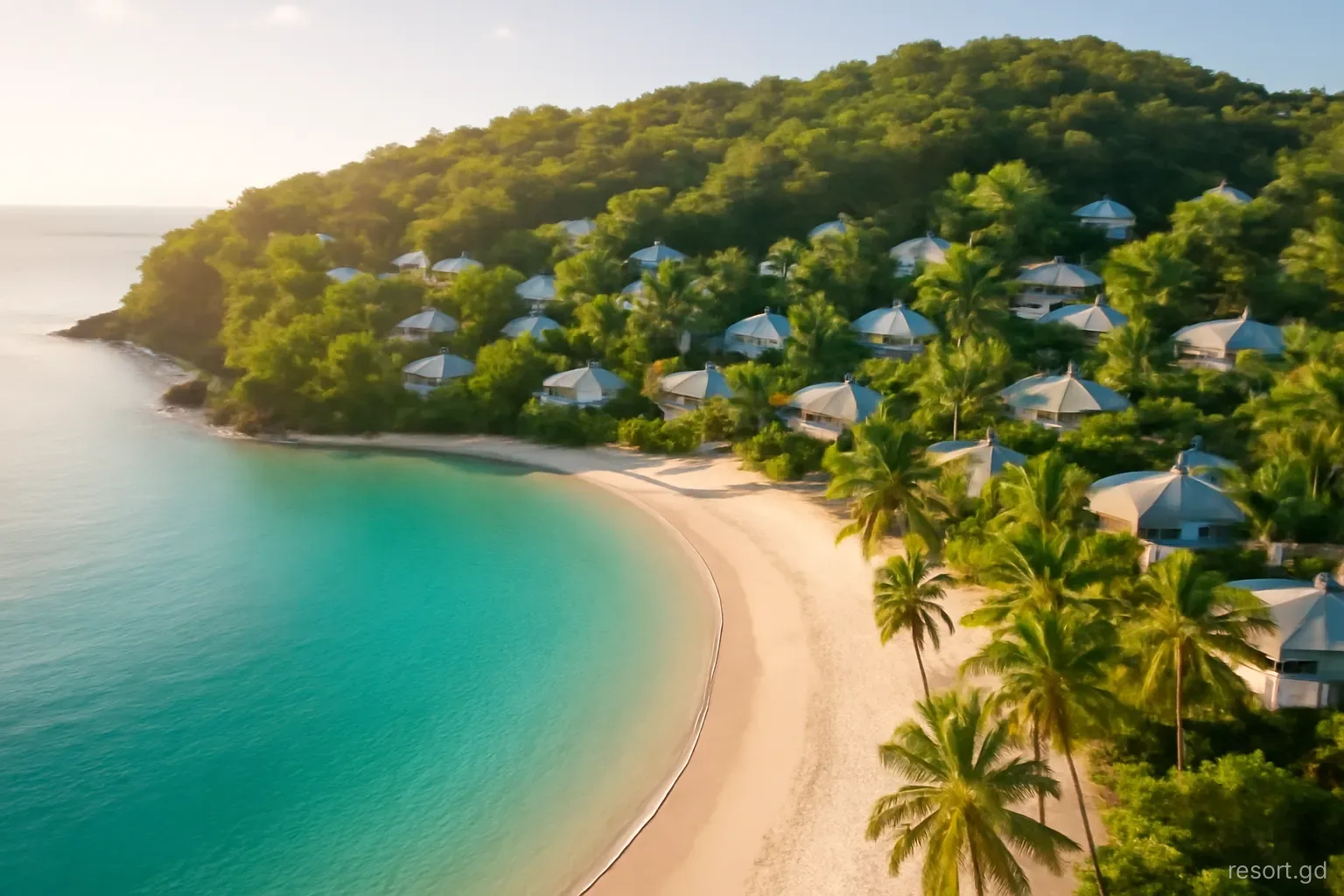
Grand Anse is roughly three kilometres of public beach facing the Caribbean, with St George's visible across the bay to the north. Beachfront plots are largely occupied by resorts of varying size, including Coyaba and Spice Island Beach Resort, so small hotels here tend to sit either on the inland side of the main road or up the slopes behind it. Blue Horizons Garden Resort, for example, is set in gardens a short walk from the sand rather than on it.
The appeal of this zone is convenience. The Spiceland Mall has a large supermarket, there are pharmacies, banks with cash machines and plenty of restaurants, and minibuses run frequently towards St George's. The trade-off is traffic noise near the main road and a busier, more developed feel. If you want to walk everywhere and are not fussy about having a beach directly outside your door, staying behind Grand Anse is the most practical choice on the island.
Remember that all beaches in Grenada are public. A hotel without beachfront can still put you on the same sand as the big resorts, just without their sunloungers.
Small properties on this stretch range from simple apartment blocks run by families to polished hotels with a pool and restaurant. Because so much is close together, it is worth looking at a satellite view before booking: you can see at a glance whether a hotel backs onto the road, sits among houses or looks over gardens, and how far it really is from the nearest public path down to the sand.
Morne Rouge and the headland
Morne Rouge Bay, widely known as BBC Beach, lies just south of Grand Anse over a small headland. It is a shorter, more sheltered crescent, usually calm and good for swimming, with fewer vendors than Grand Anse. The slopes around it hold several small and mid-sized properties, from apartment-style hotels close to the beach to hillside cottages with long views over the bay.
The headland between the two beaches, and the hillside above the southern end of Grand Anse, is where some of the island's best-known small hotels have been built to take advantage of the view. Flamboyant Hotel, for instance, occupies a slope at that end of the beach, and Laluna's cottages sit on a cove a little further round towards Quarantine Point. Rooms here can be wonderful at sunset, but check the path or road between your room, the reception and the sea before booking. Some routes involve dozens of steps.
Morne Rouge suits couples and travellers who want a swimmable beach and quieter evenings while staying close to the restaurants of Grand Anse.
Point Salines, True Blue and the airport side
Close to the runway. Maurice Bishop International Airport occupies the Point Salines peninsula. Properties on this side are excellent for a first or last night and for short trips, with transfers of only a few minutes. Aircraft noise is modest because flight numbers are low, but you will hear take-offs.
True Blue Bay. A narrow inlet east of the airport with a small marina area, waterside restaurants and the St George's University campus nearby. True Blue Bay Resort, a family-run property on the water, is a well-known example. The area has a lively feel during the university term and a quieter one in the holidays.
Magazine and Pink Gin beaches. These beaches on the airport peninsula are attractive but are partly occupied by larger resorts, including Sandals Grenada at Pink Gin. Small hotels nearby tend to be a short walk or drive from the sand.
Getting around. This zone is less walkable than Grand Anse, with fewer pavements and longer distances between restaurants. Budget for taxis or rent a car if you plan to explore the island.
What to check about any south-west location
Before committing to a property in this part of Grenada, ask the hotel or check the listing for these specifics:
- The real walking route to the nearest beach, including steps and steepness, not just the distance in metres.
- Whether you will be on or close to the main Grand Anse road, which carries heavy traffic in the morning and late afternoon.
- Distance to the nearest minibus stop if you plan to use public transport rather than taxis.
- Which way the room faces: west-facing rooms get sunsets and afternoon heat, and air conditioning matters more.
- Whether there is a restaurant open every night, or whether you will need to walk or drive to dinner.
- Proximity to bars or venues that host music on weekends, particularly in the Grand Anse and True Blue areas.
- Parking, if you are hiring a car, since hillside properties often have limited space and tight turning areas.
Matching the area to your trip
First-timers with no car usually do best behind Grand Anse or above Morne Rouge, where walking, minibuses and a short taxi ride cover almost every need. Divers often choose the Grand Anse or True Blue side because most dive centres on the south-west coast collect from hotels in this zone or run boats from nearby bays, and the Moliniere sites and the Bianca C wreck are close.
Couples looking for a view and evening quiet tend to prefer the hillsides above Morne Rouge and the southern end of Grand Anse. Travellers with mobility concerns should prioritise flatter plots near the beach road over cottages on steep slopes, even if the view is less dramatic.
Anyone staying a week or more and planning to tour the island should weigh the airport-side properties more heavily, since they put you close to the main roads east and north without the Grand Anse traffic. Whatever you choose, the whole south-west is compact enough that changing your mind about where to eat or swim costs only a short taxi ride.
Noise, breeze and light: the small differences
Breeze. The north-east trade winds cool exposed hillsides and headlands far better than sheltered plots behind the beach. A room high on the Morne Rouge headland may need air conditioning only at night, while a garden room near the Grand Anse road can feel airless in September.
Insects. Low-lying gardens with ponds or dense planting tend to have more mosquitoes than breezy slopes. Screens on windows and doors matter more than the hotel's star rating, and a ceiling fan over the bed helps.
Weekend sound. Music carries a long way across the bay on Friday and Saturday nights, and some beach bars and venues host events into the early hours. A hillside room with a sea view can sometimes hear more than one tucked behind a building.
Light and heat. West-facing rooms catch the sunset but also the strongest afternoon sun. If you plan to rest in the room after lunch, a north- or east-facing aspect or a deep shaded veranda makes a real difference.
Traffic and roosters. Early-morning traffic towards St George's starts before seven on the main road, and roosters crow wherever there are residential lots. Light sleepers should pack earplugs whichever street they choose.
Frequently asked questions
Is Grand Anse or Morne Rouge better for a small hotel stay?
Grand Anse is more convenient, with shops, restaurants and buses close by. Morne Rouge is quieter and usually calmer for swimming but has fewer amenities within walking distance. Many travellers stay at Morne Rouge and walk or take a short taxi to Grand Anse for dinner.
How far is Grand Anse from the airport?
Maurice Bishop International Airport is at Point Salines, roughly a ten- to fifteen-minute drive from Grand Anse depending on traffic. Hotels can usually arrange a taxi to meet you, and fares from the airport to the south-west hotels follow a published rate set for taxi operators.
Can you walk from Morne Rouge to Grand Anse?
Yes, it is a short walk over the headland or along the road, though the route has hills and limited pavement in places. In the evening a taxi is more comfortable, especially if you are walking back uphill to a hillside hotel.
Are the beaches public in front of hotels?
Yes. All beaches in Grenada are public, so guests at small hotels behind the beach can use Grand Anse, Morne Rouge or any other beach freely. Sunloungers and umbrellas in front of resorts are generally reserved for their own guests, but the sand itself is open to everyone.
Is it safe to walk around Grand Anse at night?
Grand Anse and Morne Rouge are generally considered safe, busy areas, and many visitors walk between hotels and restaurants in the evening. Use the usual precautions: stick to lit roads, carry little cash, and take a taxi late at night or on unlit hillside lanes.