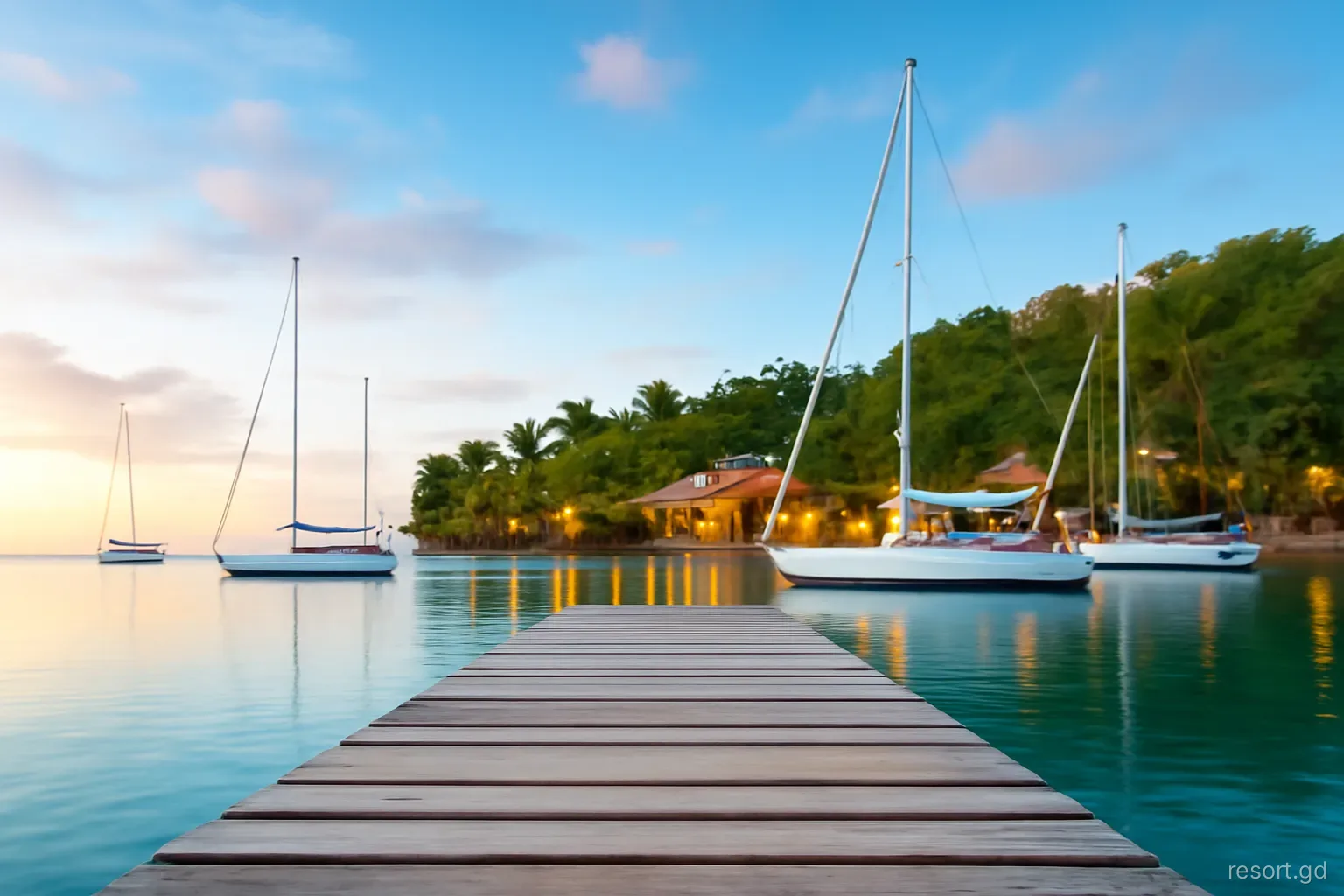
East of the airport, Grenada's south coast breaks into a series of long, finger-like peninsulas and deep bays: Prickly Bay, Mount Hartman Bay, Hog Island, Clarke's Court Bay, Petite Calivigny, Westerhall and beyond into St David. This is yachting country. The bays are among the best sheltered anchorages in the southern Caribbean, and in the hurricane season many cruising boats sit out the summer here.
For a traveller choosing a small hotel, the south coast offers something the Grand Anse strip cannot: water-facing properties on calm bays, a residential feel, and an international community of sailors, students and long-stay visitors. The beaches are smaller and some are shingly or weedy compared with Grand Anse, and you will usually need a car or taxis. Knowing those trade-offs in advance is the key to enjoying a stay here.
Lance aux Epines and Prickly Bay
L'Anse aux Epines, usually written Lance aux Epines, is a leafy residential peninsula of large houses, embassies and a handful of small hotels and cottage properties. Its western side faces Prickly Bay, one of Grenada's principal yacht anchorages, with a marina, boatyard services and waterside restaurants that fill with sailors in the evening. The peninsula's beach, lined with gardens and a few small properties including Calabash, a small luxury hotel, is calm and rarely crowded.
Staying here suits travellers who value quiet streets, mature gardens and a short drive to both the airport and Grand Anse, which is around ten minutes away. Walking within the peninsula is pleasant, though there are few pavements and it is dark at night. The beach is narrower and calmer than Grand Anse, fine for swimming but without the sweep of the bigger bay.
Prickly Bay's restaurants and bars make the area sociable in the high season, when the anchorage is full. In summer the yachts thin out and so does the evening scene, a point worth knowing if a lively bar nearby is part of the plan.
Mount Hartman, Hog Island and Clarke's Court Bay
Further east, Mount Hartman Bay holds a marina and, on its slopes, the small Secret Harbour hotel, which has long traded on its view across the anchorage; confirm it is operating before you plan around it. Hog Island sits just offshore and is known for its laid-back beach gathering spot, popular with sailors arriving by dinghy; its future has been tied up with development plans for years, so check the current situation locally.
Clarke's Court Bay, with its marina and boatyard, is more working waterfront than resort. Accommodation around these bays leans towards apartments, cottages and guest rooms attached to marinas or private houses rather than formal hotels. They suit sailors visiting friends on boats, divers who want a quiet base and anyone who prefers a view of the water to a long beach.
Expect fewer restaurants within walking distance than on the Grand Anse side. Many places can arrange dinner, and marina restaurants often serve the surrounding community as much as guests.
These bays also change with the calendar. From roughly June to November, when many cruising boats come south to sit out the hurricane season, the marinas are busy with long-stay sailors and the social life follows them: quiz nights, cruisers' gatherings and shared dinners. In the winter high season, many of those boats head north through the Grenadines, and the bays become quieter even as hotel occupancy rises elsewhere on the island.
Petite Calivigny, Westerhall and the St David coast
Le Phare Bleu. At Petite Calivigny Bay, this marina and boutique property is known for its cottages and villas beside the water and a converted Swedish lightship used as a restaurant and bar. It is a good example of how marina development on this coast has brought small-scale accommodation with it.
Westerhall Point. A gated residential peninsula in St David with private villas and houses, many of them let to visitors. It is quiet, breezy and well kept but has no shops, so plan provisions and transport carefully.
La Sagesse. A bay on the St David coast with a protected nature area, a mangrove pond and a beach backed by woodland. Small-scale accommodation here has been in and out of operation over the years, so confirm current status before relying on it.
Further east. Beyond Westerhall the coast becomes more rural, with occasional guesthouses, cottages and estate properties. You will need a car and a taste for winding roads.
Practical realities of a south coast stay
These bays reward the right traveller, but they come with conditions that are easy to overlook when booking from a photo of a sunset over masts:
- A car or regular taxis are close to essential; minibus routes do run along the main roads, but many properties sit at the end of long side roads.
- Beaches are smaller and some have seagrass, stones or sargassum weed at times, particularly on east-facing shores.
- Anchorage life means generators, dinghy outboards and the occasional party drifting across the water at night.
- Mosquitoes can be more noticeable near mangroves and sheltered water, so check that rooms have screens or nets.
- Restaurants close earlier and some open only on certain nights outside the high season.
- Road names and house numbers are not widely used, so share directions with taxi drivers using landmarks such as marinas.
Who the south coast suits
Sailors and those visiting friends aboard will find the south coast hard to beat, because almost everything they need, from chandleries to laundry to the social scene, is within reach of these bays. Divers and snorkellers can be collected from the marinas by several operators, and the reefs around the southern peninsulas offer dives that differ from the classic west-coast sites.
Couples who want quiet and a waterside room will enjoy the smaller hotels and cottages, especially in the shoulder seasons when evenings are calm. Travellers who want a big beach outside the door, lots of restaurants on foot or children's entertainment are generally happier on the Grand Anse side, a short drive west.
A combination works well. Some visitors spend most of a trip on the south coast and add a couple of nights near Grand Anse or in the north, using the short distances of the island to get the best of both.
When comparing properties on this coast, give extra weight to recent reviews that mention the road in, the state of the jetty or beach in front, and how the hotel handles meals on nights when nearby restaurants are closed. Those details, more than the room photographs, decide whether a south coast stay feels peaceful or isolated.
Getting to and around the south coast
From Maurice Bishop International Airport, most south coast properties are a ten- to thirty-minute drive, with Lance aux Epines the closest and the St David coast the furthest. Arrange the first transfer through the hotel, since side roads and gated communities can confuse drivers new to the area, and agree the fare before setting off.
Car hire makes the most sense here. You will need a temporary local driving permit, which rental companies can usually issue on the spot for a fee, and you drive on the left. Roads between the bays are narrow, hilly and busy with minibuses at peak times, so allow extra time and avoid driving unfamiliar lanes after dark.
Without a car, rely on a regular taxi driver recommended by the hotel. Many visitors keep one driver's number for the whole stay and use them for dinners, beach trips and the airport run. Minibuses run along the main roads towards St George's and Grand Anse and are cheap and frequent in daytime, but expect to walk some distance from the stop to properties at the end of the peninsulas.
Frequently asked questions
Is Lance aux Epines a good place to stay without a car?
It is possible but limiting. You can walk within the peninsula and to Prickly Bay restaurants, and taxis are easy to call. Reaching Grand Anse, St George's or the rest of the island regularly is far easier with a hire car or a trusted taxi driver.
Are there good beaches on Grenada's south coast?
There are pleasant, calm beaches, including the eastern shore of Lance aux Epines and small coves around the peninsulas, but most are shorter and narrower than Grand Anse. Some face east and collect seaweed at times. For a long sandy beach, Grand Anse and Morne Rouge are a short drive away.
Why do so many yachts stay on the south coast?
The deep, indented bays offer good shelter, and Grenada lies near the southern edge of the main hurricane belt, which many insurers take into account. Marinas and boatyards here provide haul-out, repairs and provisioning, which makes the area a long-term base for cruisers.
Is the south coast quieter than Grand Anse?
Generally yes. It is residential and spread out, with fewer large hotels. Evenings centre on marina restaurants and bars, which can be lively in the high season. Away from the anchorages, nights are usually quiet apart from dogs, frogs and the occasional generator.
How far is Westerhall from the airport?
Westerhall Point in St David is roughly a twenty- to thirty-minute drive from Maurice Bishop International Airport, depending on traffic and the route. It is further from shops and restaurants than the Lance aux Epines area, so plan groceries and transport before arriving.