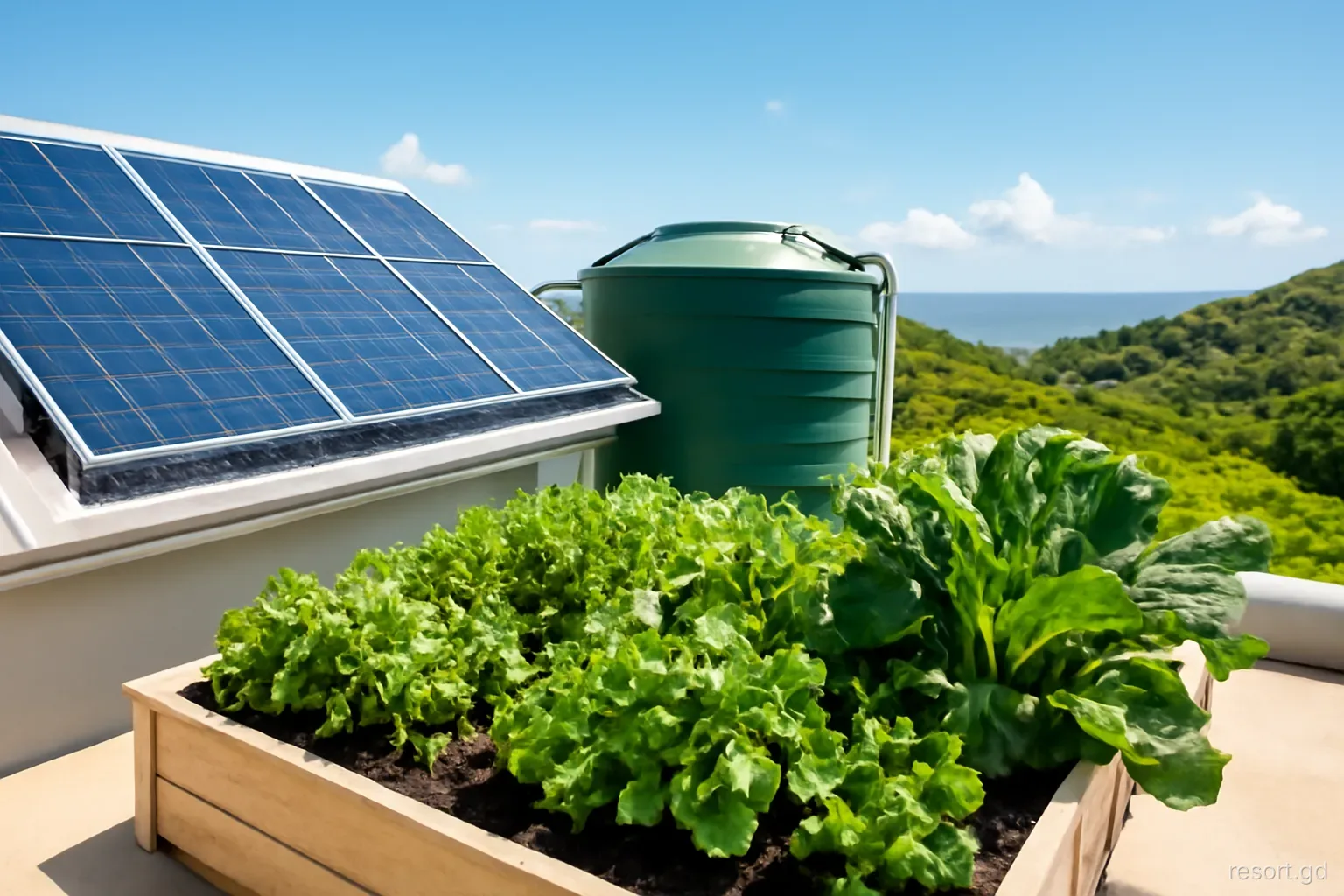
A guest at a well-run nature lodge in Grenada may never think about where the shower water came from, what powers the ceiling fan, or where the breakfast peelings go. Behind the scenes, though, a small property on a hillside or a remote bay is running something close to a miniature utility: collecting and storing water, generating part of its own electricity, treating wastewater on site and dealing with rubbish in a country with limited recycling.
Understanding those systems makes you a better guest and a sharper judge of what a property claims. It explains why a host may ask you to keep showers short in April, why air conditioning might switch off at a set hour, and why some lodges feel cool without it. This explainer walks through each system as it typically works on the island, the choices owners make, and what you can reasonably expect.
Water: roofs, cisterns and the dry season
Rainwater harvesting is old practice in Grenada. Roofs are guttered, and water runs into a cistern, usually a concrete tank built under or beside the house, or into large plastic tanks on a stand. On Carriacou and Petite Martinique, which have no permanent rivers, cisterns have long been the main source for homes. On the main island many properties are connected to the mains supply from NAWASA, the National Water and Sewerage Authority, but keep cisterns as a buffer because supply can be interrupted, particularly in the dry season from about January to May.
A lodge running mainly on rainwater has to make its stored water last through the dry months. That is why careful properties fit low-flow shower heads and dual-flush toilets, wash linen on a schedule rather than daily, and ask guests to reuse towels. In a wet year nobody notices. In a drought, a full house of guests taking long showers can empty a tank in days, and topping up by truck is expensive.
Drinking water is a separate question. Some properties filter and treat cistern water with UV or carbon systems; others supply mains water or bottled water. Ask which, and whether a refill station is available.
Power: sun first, grid and generator as backup
Solar water heating. Flat panels or evacuated tubes on the roof heating a storage tank have been common across Grenada for years. They work well in the island's strong sunshine, though showers can run lukewarm after several cloudy days.
Solar electricity. Photovoltaic panels feed the property's own use, sometimes alongside the grid. Lodges with battery storage can keep lights, fans, refrigeration and internet running through the night and during outages. The size of the battery bank decides how much can run after dark.
Air conditioning is the big load. One air-conditioning unit can use more power than the rest of a small cottage combined. That is why solar-powered properties may limit it to certain hours, offer it in some rooms only, or design for natural ventilation instead.
Generators remain common. Even well-designed properties often keep a generator for emergencies and long cloudy spells, especially after the experience of hurricanes. A generator in reserve is sensible; a generator running every evening contradicts an off-grid claim.
Design does half the work. Louvred windows, high ceilings, deep verandas, light-coloured roofs and shade trees cut the need for mechanical cooling. Hillside sites catch the trade winds that a sheltered beachfront plot may miss.
Wastewater and why it matters for reefs
Much of Grenada outside the main sewered areas relies on septic tanks and soakaways. On a steep hillside or close to the shore, a poorly sized or badly maintained system can leak nutrients into streams, mangroves and eventually the sea, where they feed algae that smother coral. This is one of the least visible and most important differences between properties.
Better-run lodges separate grey water (from sinks and showers) from black water (from toilets) and reuse treated grey water on gardens, or install small treatment units that break down waste before it is released. Some use constructed wetlands, beds of plants and gravel that filter water naturally. Composting toilets exist at a few nature properties and are usually explained clearly to guests when they arrive.
You cannot inspect a septic system, but you can ask how wastewater is handled. A host who has invested in proper treatment will be glad to explain it, and the answer says a great deal about how seriously the property takes its surroundings, particularly if it sits above a bay or beside a river.
Waste, compost and the kitchen garden
Rubbish is a real challenge on a small island, and the way a property manages it shows up in small details.
- Grenada has banned Styrofoam food containers and single-use plastic carrier bags, so takeaway food comes in paper or card, and guests are expected to carry reusable bags for shopping.
- Recycling options are limited, so the most effective step is avoiding waste: refill stations instead of bottled water, bulk dispensers for soap and shampoo, and cloth napkins rather than paper.
- Food scraps from the kitchen often go to compost heaps that feed the garden, or to a neighbour's animals, which is a long-standing practice in rural Grenada.
- Kitchen gardens on lodges commonly grow herbs, callaloo, peppers, sorrel in season and fruit trees such as mango, golden apple, breadfruit and citrus.
- Glass bottles may be returned through deposit systems for some local beverages; ask your host what to do with empties.
- Burning rubbish is still seen in rural areas; a property committed to sustainability should have a better plan, such as regular collection or taking waste to an approved site.
What guests are asked to do, and why it is reasonable
Sustainable properties usually ask for a few small things. Turn off fans, lights and air conditioning when you leave the room. Keep showers short, particularly in the dry season. Reuse towels. Use the refill station rather than buying bottled water. Put food waste in the compost bin rather than the rubbish. Do not pick plants or flowers on the property or on trails, and take any litter from day trips back with you.
None of this is onerous, and most guests are happy to help when the reason is explained. Where friction arises, it is usually because expectations were not set before booking. A guest who assumed unlimited air conditioning and found it available only at night will feel short-changed, even if the policy is sensible. Good properties state their arrangements plainly in the listing and in the confirmation email.
If something is unclear, ask before you travel. It is far easier to choose a different room or property than to spend a week frustrated by a system you did not know about.
Questions worth asking before you book
A short list of practical questions tells you how the systems work in daily life. Is the water from mains, cistern or both, and is drinking water filtered? Is there backup power, and what does it run? Is air conditioning available, and at what times? How is wastewater treated? Do you grow any of the food you serve? What happens to rubbish and recycling?
You are not looking for perfection. A small family-run lodge with a well-maintained cistern, solar water heating, a kitchen garden and honest answers may be doing more for its surroundings than a larger property with an impressive sustainability page. Specific, unembarrassed answers are the best sign. Hesitation, or replies that change the subject to the view or the pool, suggest the systems are an afterthought.
Remember that conditions shift with the season and, since the hurricanes of recent decades, with repair and rebuilding. A lodge recovering from storm damage may be running on generator power temporarily. A frank explanation of that is a good sign, not a bad one.
Frequently asked questions
Why do some Grenada lodges ask guests to limit showers?
Many rural and island properties store rainwater in cisterns, and supply has to last through the dry season, roughly January to May. Short showers and reused towels help a property avoid running out or paying for water deliveries during a drought.
Is cistern water safe to drink?
It depends on how it is treated. Some properties filter and disinfect rainwater; others provide mains or bottled water for drinking. Ask your host which water is intended for drinking and whether there is a refill station for reusable bottles.
Do solar-powered lodges in Grenada have reliable electricity?
Most combine solar with the grid or a battery bank and keep a generator for emergencies. Lights, fans and refrigeration usually run without problems, while air conditioning may be limited to certain hours or rooms to manage demand.
Does Grenada recycle plastic and glass?
Recycling options are limited. Grenada has banned Styrofoam food containers and single-use plastic bags, and some local bottles go back through deposit systems. Avoiding waste in the first place, especially bottled water, is the most effective step a visitor can take.
What is a composting toilet like?
A composting toilet uses little or no water and breaks waste down with sawdust or similar material. Properties that use them explain how they work on arrival. They are clean and odour-free when properly managed, and save a significant amount of water.